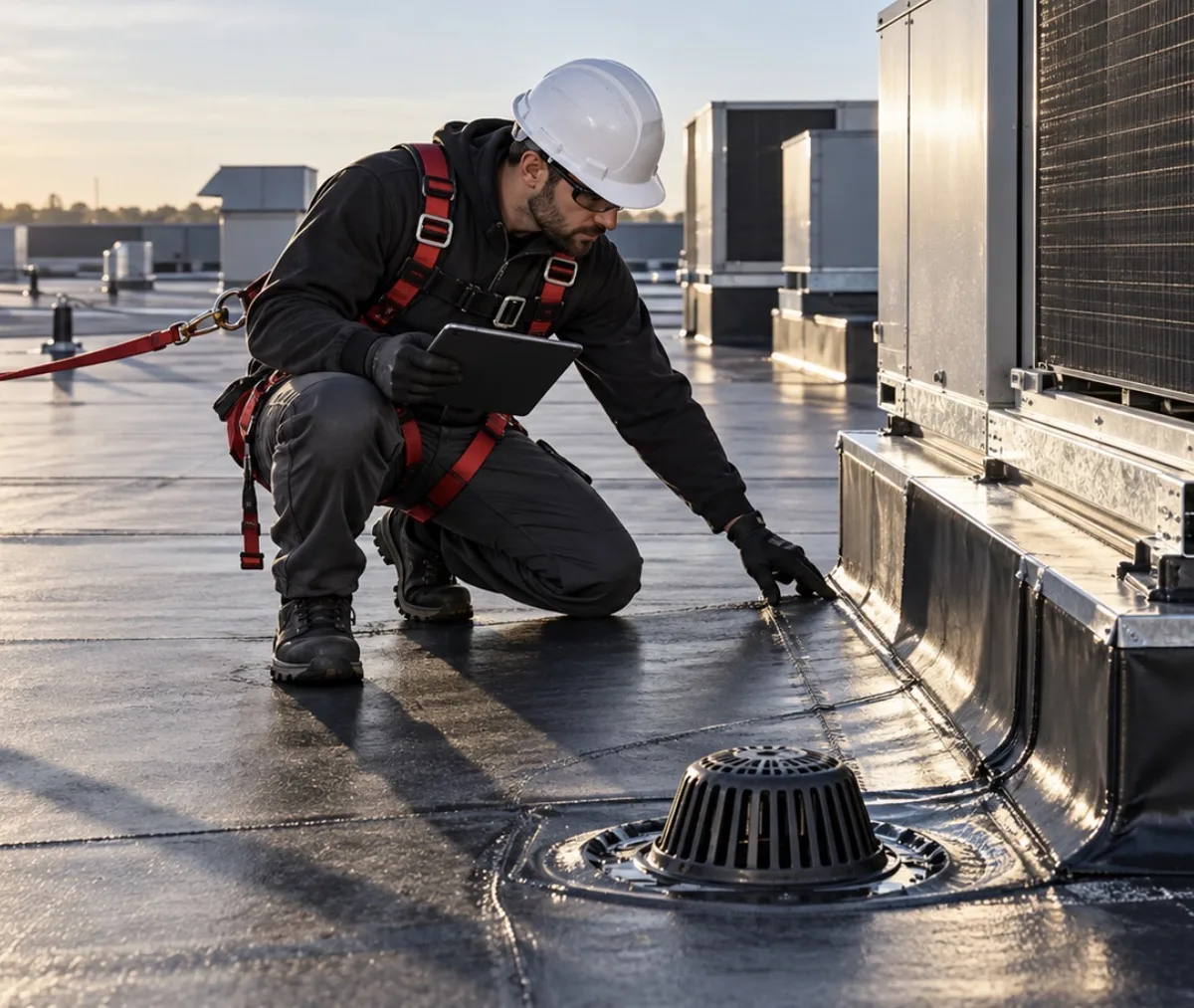
On the roof: what gets checked
- Membrane field: punctures, cuts, blisters, splits, shrinkage, chalking and worn areas.
- Seams and laps: open or weak seams on TPO, PVC, EPDM and Duro-Last roofs.
- Flashings: at parapets, walls, curbs, skylights and roof hatches.
- Penetrations: pipe boots, vents, conduit, pitch pans and HVAC lines.
- Edge metal and copings: loose sections, missing fasteners, rust and open joints.
- Drainage: drains, overflow drains, scuppers, gutters and downspouts, plus any ponding.
- Rooftop equipment: curbs, supports, condensate lines and damage left by service work.
- Soft spots: spongy areas underfoot that point to wet insulation.
- Lightning protection components, where a system is installed.
Inside the building
Ceiling stains, wet or sagging tiles, rust or water marks on the underside of the deck, and musty smells all tell the story of where water is getting in. A good inspector looks inside as well as on top.
Finding hidden moisture
Water trapped under the membrane is the most expensive problem to miss, because it decides whether a roof can be repaired, covered over or must be torn off. Where the roof shows signs of trapped water, the inspector can open small test cuts to check the insulation, then patch them properly.
Coastal Bend items to add
On buildings near the bay and Gulf, check closely for rust on edges, fasteners and equipment. Before hurricane season, focus on the edges and corners, where wind damage starts. If your building has a windstorm certificate, keep it with the inspection report.
When to schedule an inspection
- At least twice a year, spring and fall, as the National Roofing Contractors Association recommends.
- After any hurricane, tropical storm, hail or strong wind.
- Before you buy, sell or lease a commercial building.
- Before a roof warranty runs out, so problems are found while coverage is in place.
- Whenever a leak shows up inside.
What you should get
Dated photos, a simple roof plan showing where problems are, and a written report that sorts items into what needs fixing now, what can wait, and what to watch. You should come away knowing the roof's condition and what it is likely to need, without being pushed into work you do not need.
Inspecting before you buy or lease
When you are buying or leasing a commercial building in Corpus Christi, the roof can be one of the largest costs you inherit. A pre-purchase roof inspection tells you what system is on the building, its general condition, whether the insulation is wet, what repairs it needs now, and roughly how much life it has left. Ask the seller for any roof warranty and whether it can be transferred, the windstorm certificate if the building has one, and records of past repairs. Use what you learn when you negotiate.
Inspecting before a warranty runs out
If your roof warranty ends next year, have the roof inspected now. Problems found while coverage is in place may be handled under the warranty, depending on its terms. After it expires, the same problems are yours to pay for. Check what your warranty requires for making a claim and follow it.
A sample inspection report, in plain terms
- Roof basics: system type, approximate size, number of drains and penetrations.
- Fix now: active leaks, open seams, failed flashings, loose edge metal, blocked drains.
- Plan for: worn areas, aging sealants, ponding areas, rust starting on metal.
- Watch: items that are fine today but should be checked next visit.
- Photos: each item, with its location on a simple roof plan.
That kind of report lets you budget, plan and compare quotes with confidence.
Inspecting after a storm
After a hurricane, tropical storm or hail, damage is not always obvious from the ground. Lifted edges, small punctures from flying debris, loosened flashings and cracked skylights can leak slowly for weeks before anyone notices. A post-storm inspection with dated photos documents what happened and when, which matters if you file an insurance claim. Talk to your insurance agent about deadlines for reporting damage.
Schedule an inspection
Nelson Roof Contracting has over 50 years of hands-on experience on commercial roofs, and every job is supervised. We inspect roofs from Corpus Christi and Calallen to Portland, Rockport, Kingsville and Alice. Call (361) 683-1733.

Meet the owners
Nelson Roof Contracting is owned by Nelson and Esperanza Alvarado. Nelson brings over 50 years of hands-on roofing experience to Corpus Christi and the Coastal Bend, and every job is supervised. When you call, you are calling a family business that has been on these roofs for decades.
Office (361) 683-1733
24/7 line (361) 320-3131
Updated October 2026 by Nelson Roof Contracting, Corpus Christi, TX.