The sun: UV that breaks roofs down
South Texas gets strong sun most of the year. Ultraviolet light slowly breaks down roofing membranes, sealants, caulks and coatings. On older roofs you see it as chalking, crazing, cracking and brittle material that tears instead of flexing. Dark roofs also soak up heat, which pushes the temperature of the membrane, the insulation and the building below even higher.
Heat: a roof that moves every day
A commercial roof heats up in the afternoon sun and cools at night. Every cycle makes the membrane, edge metal and flashings expand and shrink. Over years, that movement pulls at seams, loosens fasteners, cracks sealant at penetrations and can make some membranes shrink away from walls and edges. The details take the beating, which is why most leaks here start at flashings and penetrations.
Salt air: rust you can see and rust you cannot
Salt carried on the wind from Corpus Christi Bay and the Gulf settles on everything. It speeds up rust on:
- Edge metal, copings and gutters.
- Fasteners, plates and screws, including the ones holding panels on metal buildings.
- HVAC curbs, equipment stands, vents and exhaust hoods.
- Steel decks, once water gets through the roof.
The closer to the water, the faster it happens. Buildings on North Beach, Padre Island, Ingleside, Aransas Pass, Port Aransas and Rockport feel it most, but the whole Coastal Bend sees it.
Humidity and rain
Humid air and frequent storms keep moisture around. Small openings stay wet longer, which feeds rust, mildew and rot. Tropical rain driven by wind can push water into laps and edges that never leak in a normal shower.
Building a roof for this climate
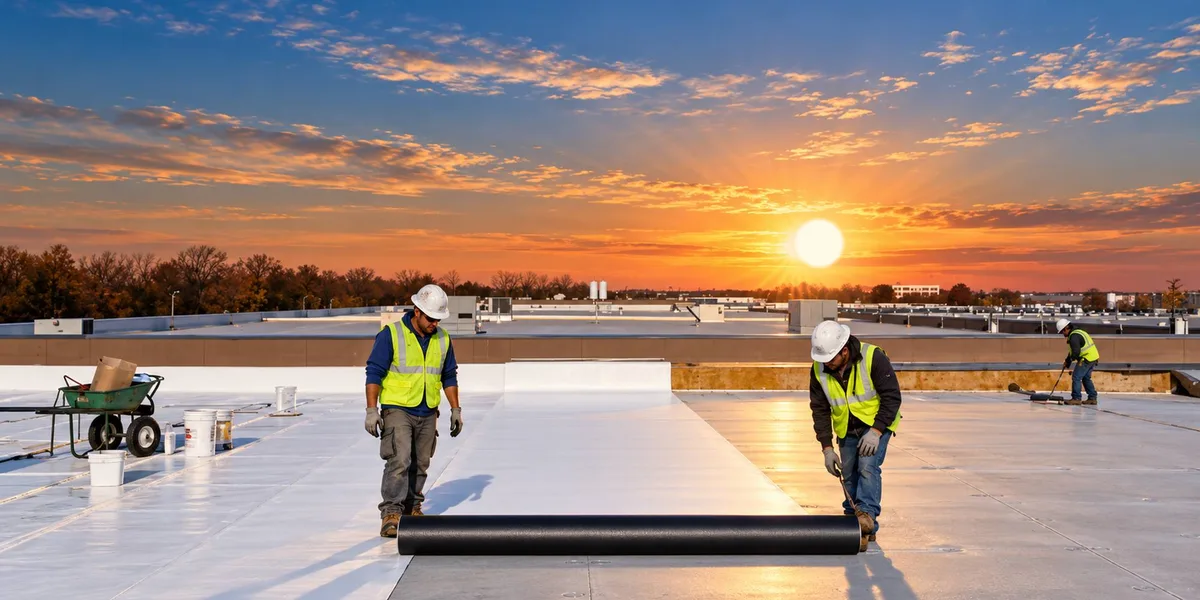
- Reflective white single-ply such as TPO, PVC or Duro-Last to cut heat gain and UV stress.
- Heat-welded seams, which hold up better to daily movement than glued or taped seams.
- Corrosion-resistant metal and fasteners at edges, copings and penetrations.
- Well-built flashings at walls, curbs and penetrations, where coastal roofs fail first.
- Coatings to renew a tired but dry roof surface and add UV protection.
Where coastal damage starts on a roof
- Edge metal and gutters: cut edges and fastener holes rust first, then the metal loosens and lets wind under the roof.
- Fasteners: plain steel screws and plates rust, weaken and stain the roof.
- Sealants: caulk at pitch pans, termination bars and penetrations shrinks, cracks and pulls away.
- Rooftop equipment: HVAC cabinets, stands and ductwork rust, and the curb flashings around them crack.
- Skylights: plastic skylight panels yellow, turn brittle and crack in the sun.
Industrial and port buildings
Plants, warehouses and terminals around the Port of Corpus Christi, the refinery corridor along the Ship Channel, and industrial sites in Ingleside face salt air plus airborne industrial exposure. Roofs there need materials chosen for the conditions, careful details and closer inspections. Our industrial and plant roofing guide goes deeper.
White roofs and cooling costs
A white, reflective roof bounces back much of the sun's heat instead of absorbing it. In a climate where air conditioning runs most of the year, that can mean a cooler roof, less heat stress on the membrane and less heat entering the building. How much difference it makes depends on the building, its insulation and how it is used, but reflective single-ply is a common choice on new and replacement roofs across the Coastal Bend.
Cleaning salt and grime off the roof
Salt and dirt build up on roofs and rooftop equipment between rains. Gentle cleaning with the right non-abrasive cleaner, as your roof manufacturer allows, removes the film that holds moisture against metal and sealants. Avoid pressure washers and harsh solvents on single-ply roofs, which can damage the membrane. When in doubt, ask your roofer before anyone cleans the roof.
Maintaining against the coast
Inspect at least twice a year and after storms. Watch for rust starting at edges and fasteners, cracked sealant, chalky or brittle membrane, and loose metal. Rinse and clean rooftop equipment where salt builds up. Catching rust early is far cheaper than replacing metal and decking. Nelson Roof Contracting, with over 50 years of hands-on experience on Coastal Bend roofs, can set your building up on a schedule. Call (361) 683-1733.

Meet the owners
Nelson Roof Contracting is owned by Nelson and Esperanza Alvarado. Nelson brings over 50 years of hands-on roofing experience to Corpus Christi and the Coastal Bend, and every job is supervised. When you call, you are calling a family business that has been on these roofs for decades.
Office (361) 683-1733
24/7 line (361) 320-3131
Updated October 2026 by Nelson Roof Contracting, Corpus Christi, TX.